Olympia, WA, gives trees a lot to work with: steady rain, mild seasons, and plenty of rich, green growing space. That’s great for many yards, but our climate can also make tree problems harder to spot until they are already moving along.
At Carlson Tree Care, our tree service experts spend a lot of time helping homeowners determine whether a tree simply looks stressed or if something more serious is happening. A healthy tree adds shade, privacy, curb appeal, and value to your property. When a tree starts to decline, though, small warning signs can become larger safety concerns if nobody catches them early.
Trees react to everything around them. Soil conditions, drainage, weather, pruning history, nearby construction, and root disturbance all play a role in long-term health. In Olympia, the rainy season creates excellent growing conditions, but it can also keep soils saturated long enough to stress roots and encourage fungal problems.
The National Oceanic and Atmospheric Administration, or NOAA, reports that Olympia Airport averages 50.62 inches of annual precipitation based on 1991–2020 climate normals. That amount of rainfall explains why drainage and root health matter so much in Western Washington landscapes.
This is why we look beyond leaves and branches during inspections. Canopy density, trunk structure, root flare visibility, soil conditions, nearby targets, and signs of decay all help tell the story of how a tree is handling its environment.
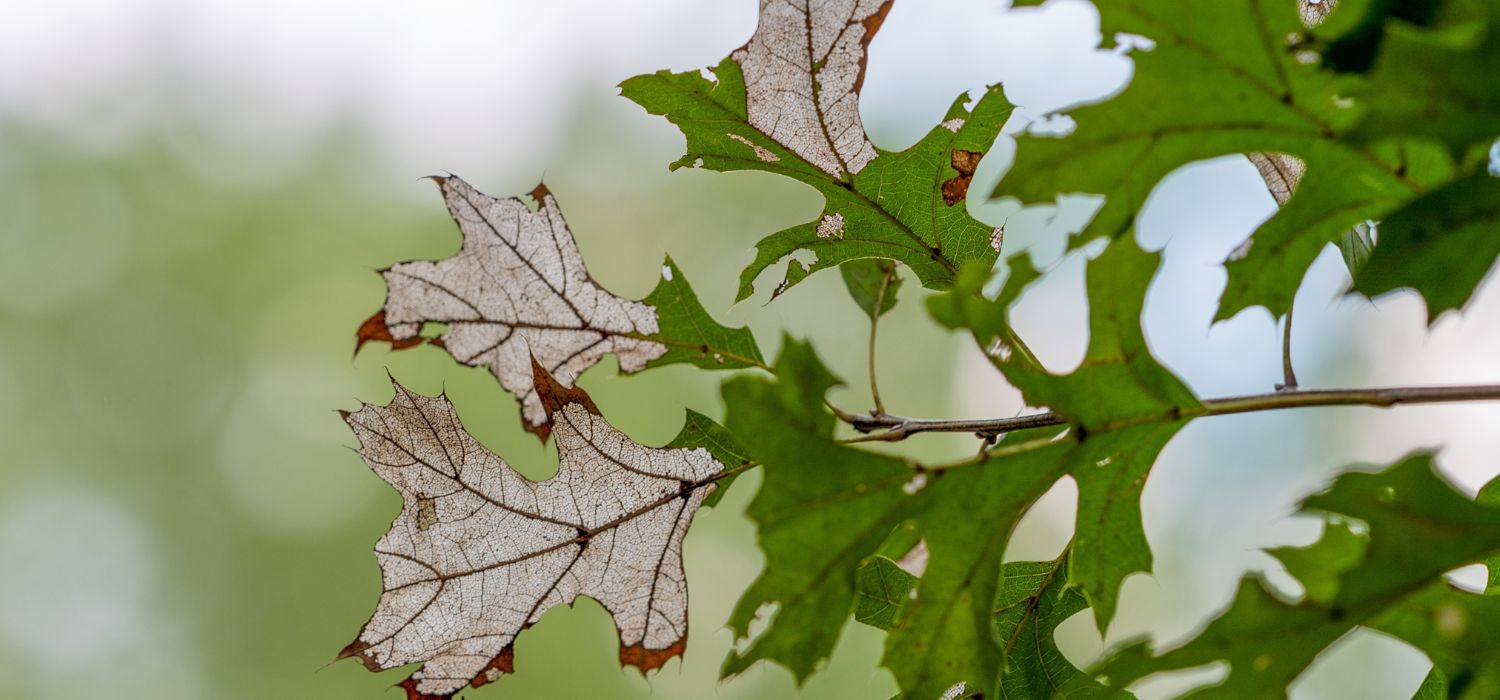
Leaf diseases tend to show up first because they are easier to spot. Wet spring weather often brings leaf spot diseases, which may appear as yellow, brown, or black patches across the foliage. Anthracnose is another common issue that can create dead areas on leaves and twigs and occasionally lead to early leaf drop.
Root problems are usually more concerning because much of the damage happens below ground. Root rot caused by organisms such as phytophthora may lead to thinning foliage, dieback, slow growth, or sudden decline. Since roots support stability and nutrient transport, damage to them can affect the entire tree.
We also keep an eye out for cankers, cavities, fungal growth, soft wood, and other signs of decay. Certain diseases, including Dutch elm disease and oak wilt, target specific species and may spread quickly under the right conditions.
Most homeowners notice problems before they realize how important those changes might be. A quick walk through the yard after storms or long stretches of rain can reveal early warning signs.
A few things deserve a closer look:
Dead branches may fall with little warning during windy weather. Cracks in the trunk can reduce structural strength, especially when combined with decay. Mushrooms near the base sometimes point to root or lower trunk decay, while fresh lean or soil movement may signal root instability underground.
Not every symptom indicates a tree is dangerous, but sudden changes shouldn’t be ignored. When large trees sit close to homes, driveways, sidewalks, or play areas, even moderate defects deserve attention.
A professional inspection helps narrow down what’s actually happening instead of relying on guesswork. We evaluate the canopy, trunk, root zone, and surrounding site conditions while looking for signs of disease, pest activity, storm damage, soil compaction, decay, and structural weakness.
Site history matters too. Sometimes a tree starts to decline after nearby trenching, grading, driveway installation, or repeated heavy traffic over the root zone. In other cases, poor pruning years ago creates structural problems that only become obvious later.
For most properties, annual inspections are enough to stay ahead of major issues. After severe weather or visible changes in the tree, scheduling another inspection is a smart move. Catching problems early often gives homeowners more options and may help preserve trees with a strong future.
A tree risk assessment focuses specifically on safety. The goal is to determine how likely a tree or branch is to fail, what it could strike, and how serious the consequences might be.
Location matters quite a bit. A declining tree in the far back corner of a property usually creates less concern than one leaning over a home, power line, or busy driveway. During assessments, we consider structural defects, root stability, canopy weight distribution, soil conditions, weather exposure, and visible indicators of decay.
Sometimes pruning reduces the risk enough to keep the tree safely in place. Other situations call for cabling, monitoring, drainage improvements, or removal. Recommendations depend on the condition of the tree and the level of risk around it.
Carlson Tree Care provides tree trimming, aesthetic pruning, tree removal, stump grinding, stump extraction, land clearing, debris removal, emergency tree service, commercial tree removal, and firewood delivery services throughout Olympia and nearby communities.
Pruning is often one of the best ways to improve tree health and reduce storm-related risk. Removing deadwood, reducing weight on overextended limbs, and improving canopy balance can help trees handle wind and heavy rain more effectively. We avoid harmful practices like topping because topping often leads to weak regrowth and future structural problems.
When a tree no longer has a safe structure or can’t reasonably recover, removal may become the safest option. Careful planning matters during removals, especially near homes, fences, landscaping, or tight access areas. Afterward, stump grinding or extraction can help prepare the area for future landscaping or planting.
Good tree care habits don’t need to be complicated. Keeping mulch away from direct contact with the trunk, protecting the root zone from heavy equipment, and avoiding unnecessary soil disturbance all help promote healthier growth.
Young trees benefit from extra watering during dry summer periods, even in Western Washington. Mature trees generally need less attention, but drought stress can still show up after hotter summers.
Before digging, trenching, or changing drainage around large trees, it helps to get guidance first. Root damage may not appear immediately, but it can weaken stability and health over time.
Tree care becomes much easier when problems are caught early. Dead limbs, fungal growth, trunk cracks, root disturbance, thinning canopy, and sudden lean are all signs worth paying attention to before they develop into larger concerns.
In and around Olympia, we help homeowners make informed decisions about pruning, inspections, storm damage, removals, and long-term tree care. Whether your trees need routine maintenance or a closer safety evaluation after rough weather, our goal is to help you understand your trees’ condition and choose the next step that makes the most sense for your property.
Sometimes, yes. The answer depends on the tree species, the disease, the amount of damage, and the risk to nearby targets.
Cost depends on tree size, access, condition, urgency, and the type of work needed. We recommend getting a clear estimate from a licensed and insured tree care company.
Watch for dead limbs, thinning canopy, trunk cracks, mushrooms near the base, root heave, sudden lean, or early leaf drop.
Call when you notice large dead limbs, storm damage, disease symptoms, a leaning tree, or a tree growing close to a home, road, sidewalk, or power line.
Shelton WA 98584
Mon - Fri 8am- 6pm
Sat - Sun by Appointment
Call us for a free estimate
360-490-7001