
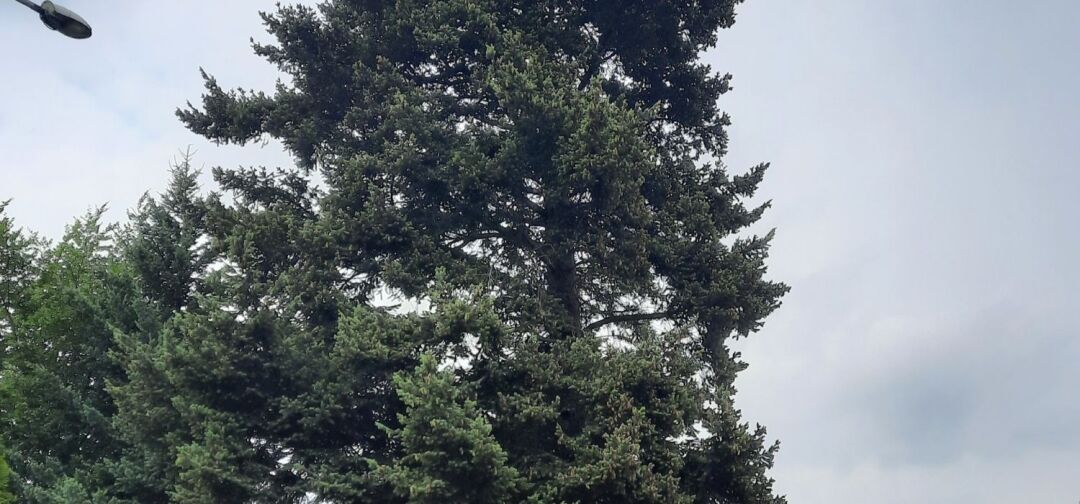
That giant Douglas fir in your backyard looked great when you bought the place. Now it towers over the roof, sways every time the wind picks up, and has you checking the forecast more than you’d like to admit.
Big trees in tight spots make for some of the trickiest jobs in tree removal, and sometimes the safest answer is a crane. Here’s how crane tree removal works, when it’s worth it, when it isn’t, and what to expect on removal day at your property in or around Shelton, WA.
Picture taking a tree apart from the top down, one piece at a time, without dropping a single chunk onto your roof. That’s the basic idea behind crane-assisted tree removal.
A climber or a worker in a bucket truck attaches heavy-duty straps, called slings, to a section of the tree. The crane operator takes up the slack so the crane holds that section’s weight. Only then does the cutter make the cut. From there, the freed piece travels up and away, then settles into an open landing zone, usually the driveway or street, where the ground crew cuts it up and chips it into mulch.
Crews call each lift a “pick,” and they plan every one. Wood weighs more than most people expect, especially a freshly cut, waterlogged conifer. Lifting capacity also drops the farther the boom reaches out, so the crew sizes each piece to stay within what the crane can handle at that distance. Bigger cranes can take bigger pieces, which means fewer picks and less time.
There’s an actual rulebook for this, too. The tree care industry’s safety standard, ANSI Z133, includes specific rules for crane work. It calls for a qualified arborist in charge of the job, and it requires the crane to sit level on firm ground. The cutter and operator keep in touch throughout the job, usually by radio, hand signals, or both.
Most tree removal jobs near a house leave very little room for error. Traditional rigging lowers pieces with ropes, but ropes still swing, and heavy wood can drop or bounce. With a crane, the weight goes up and away from your home instead of down toward it.
Some yards just don’t have the space. Maybe the tree sits between a fence, a shop, the neighbor’s place, and a garden bed you’d hate to lose. Tight space tree removal like that usually means lowering everything slowly and carefully, but a crane can lift pieces right over the obstacles instead.
Climbers tie their own safety lines into the tree they’re cutting. Rotten, cracked, or storm-damaged wood might not hold a climber, let alone the force of rigging heavy pieces off it. With a crane, the crew can take the tree apart without leaning on weak wood. Root rot, which shows up often in our Douglas firs, is a classic example.
Bucket trucks need to drive close to the tree on firm ground. When the only way into the backyard is a narrow gate or a steep slope, a crane parked out front can often reach over the house.
Large tree removal by climbing and rigging alone can take a long time on a huge conifer. Bringing in a crane can shorten that, so you have less time with a crew, chainsaws, and a chipper running in your yard.
Cranes aren’t the right fit for every tree. If there’s an open lawn where the tree can be taken down in pieces, or room to fell it outright, a crane may just add to the cost. Our 55-foot bucket truck handles plenty of jobs where the tree is reachable and the ground can support it, and skilled climbing with good rigging covers many more. We’ll look at the tree, the access, and what’s around it, then explain which approach makes sense and why.
Low-impact tree removal is a big part of how we work. Dragging huge logs across a soggy Western Washington lawn leaves ruts that can take a season to fix. Lifting pieces straight out keeps that weight off your grass, gardens, and hardscaping.
Here’s the catch: cranes are heavy. They spread that weight through extendable legs called outriggers, which sit on pads or mats, but they still need a solid, level spot to set up, usually a street or driveway. After days of heavy rain, soft shoulders and saturated ground can make setup unsafe, and that alone can delay a job.
Shelton’s tree code chapter focuses on public trees, so it usually doesn’t apply to a tree on your own lot. Other rules still might apply, though. Trees on city-owned land or in the public right-of-way (often the strip along the street) need an application and a removal permit from the city’s urban forester. If your property includes a designated critical area, tree removal in that area goes through the city’s community development department. Setting up a crane on a public street may also need separate approval.
Outside city limits, Mason County and Thurston County have their own rules, and Olympia, Lacey, and Tumwater each have their own codes. A quick call to the right office before scheduling can save a lot of headaches.
A little prep makes removal day go smoother:
The crew arrives, walks the site, and confirms the plan. The operator sets the crane’s outriggers on pads, and the crew blocks off the work zone. Bystanders stay out, and nobody stands under a load.
Most jobs start at the top. The cutter rigs the first section, the operator takes the weight, and the crane lowers the piece to the landing zone. While the ground crew processes that wood, the cutter rigs the next pick. Limbs come off first, then the trunk in sections, until only a manageable stump remains.
If power lines run near the tree, the utility may need to get involved before work starts. No person or piece of equipment goes inside the minimum safe distance of an energized line.
Wind matters a lot. A big piece of wood hanging from a crane acts a bit like a sail, so gusty weather can delay picks. If the forecast turns ugly, rescheduling is the safe call.
Once the tree’s down, we clean up the branches and debris. You decide what happens to the wood. We can mulch it, cut it into firewood, leave it in log form, or haul it away.
Next comes the stump, which we can grind down to ground level or pull out with the whole root system if you’re planning to build, regrade, or replant in that spot.
No matter who you hire, these questions help you know what you’re getting:
The crane adds cost, but it often cuts the hours a crew spends on site. Price depends on the tree’s size, how much crane the job needs, access, and whether traffic control is involved. A free estimate is the only honest way to know.
Most crane setups occur on pavement, so your grass stays out of the way. Lifting pieces out instead of dragging them is the whole point of keeping the impact low.
Many residential removals take a few hours to a full day. Crane jobs can take longer due to setup and safety procedures. The size of the tree matters most.
If a tree near your home has you nervous, you don’t have to guess at the right approach. Carlson Tree Care is a member of the Tree Care Industry Association based in Shelton, WA, serving the surrounding communities. Schedule your free consultation, and we’ll look at the tree together and walk you through your options.
Shelton WA 98584
Mon - Fri 8am- 6pm
Sat - Sun by Appointment
Call us for a free estimate
360-490-7001
