360.490.7001
<< View All Posts

Commercial Tree Service For Olympia, WA, Businesses

Read time: 7 min.
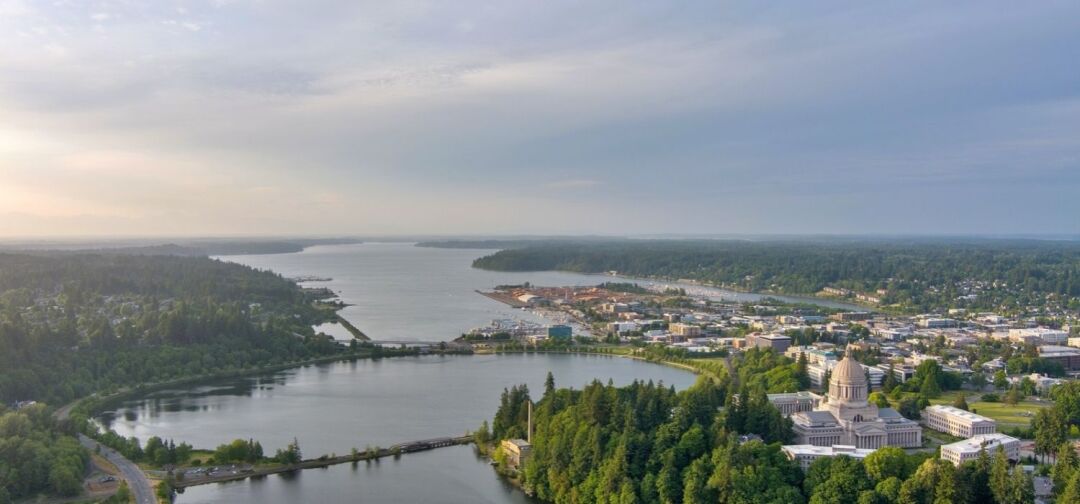
Aerial view of Olympia, WA, at sunset, featuring Capitol Lake, Budd Inlet, the Washington State Capitol building, and surrounding green landscapes.

Trees do a lot for a business property, shading the parking lot, softening the building’s appearance, and making the place feel more welcoming. They can also drop a limb on a customer’s car, block the lights over your lot, or come down across your entrance during a winter windstorm.

If you manage a storefront, office park, apartment complex, or other business property in Olympia, WA, this guide covers:

  • What a good commercial tree service actually does
  • The tree problems that show up most on business properties
  • How to build a simple plan that keeps surprises to a minimum

How Commercial Tree Work Differs From Residential

The core skills stay the same. Trimming a maple behind a dentist’s office isn’t so different from trimming one in a backyard. What changes is everything around the tree.

More people move through the work area on a commercial job, including employees, customers, tenants, and delivery drivers. The crew may need to close part of a parking lot or drive lane while they work. Trees tend to be bigger and sit closer to buildings, lights, signs, and power lines. Property managers usually need a written estimate to pass along to an owner or homeowners association (HOA) board, and that approval step can take a while.

A crew that’s used to commercial sites plans for all of this up front, so it can finish the job safely without shutting your business down for the day.

Common Tree Problems on Olympia Business Properties

These issues come up repeatedly on commercial sites. If any of them sound familiar, it’s worth getting someone out for a look.

  • Blocked lights and cameras: Trees creep into the sightlines of parking lot lights and security cameras a little more each year. A dark corner of the lot can make people feel less safe and raise liability concerns.
  • Branches over roofs: Overhanging limbs drop needles and leaves into gutters and roof drains, and they can damage the roof during storms.
  • Hidden signs: A tree in front of your sign costs you visibility you’re already paying for.
  • Limbs over parking spaces and drive lanes: Low branches scrape box trucks and RVs, and deadwood falls onto parked cars. City codes often set minimum clearance heights over streets and sidewalks, so check the City of Olympia’s current standards for your frontage.
  • Roots lifting sidewalks and pavement: Heaved concrete creates trip hazards. Cutting roots can destabilize a tree, though, so this calls for a careful decision rather than a quick fix.
  • Storm-prone trees: Large conifers along parking lot edges and in landscape islands often have far less root space than trees in open ground. Saturated winter soil makes that worse, and a tall Douglas fir in a narrow planting strip can tip over in a strong windstorm. Multi-trunk bigleaf maples deserve a look, too, since the spots where their trunks join can split under a heavy canopy.

Our Commercial Tree Services

Every service we offer is available to commercial property owners. Here’s what each one covers and how the work typically goes.

Business Tree Removal

Business tree removal makes sense when a tree is dead, has severe trunk decay, leans more than it used to, or is in the way of construction, paving, or expansion.

Most commercial trees can’t come down in one piece, since there’s usually a building, a light pole, or a row of parked cars in the way. Instead, the tree comes apart from the top down, with ropes and rigging lowering each piece to a cleared drop zone. When there isn’t room for even that, we bring in a crane for a low-impact removal. Each section gets lifted clear of the building and set down where it won’t crack pavement, curbs, or landscaping.

As for the wood, it’s your call. Chips can top-dress your landscape beds, rounds can become firewood, logs can stay on site, or we can haul everything away.

Tree Trimming and Pruning

Regular trimming is the backbone of tree maintenance for commercial properties. On business sites, it usually focuses on:

  • Clearance pruning: This lifts limbs off roofs, signs, lights, and drive lanes.
  • Deadwood removal: Dead branches turn brittle, and the first strong gust can bring them down onto cars and walkways.
  • Hangers: A limb that breaks in a storm doesn’t always fall. It can get caught higher up in the canopy and sit there for weeks, waiting for the next gust. Tree crews call these widow makers, and on a business property, they need to come down before someone parks under one.
  • Wind sail reduction: Selective thinning lets wind pass through the canopy. The trick is restraint, since over-thinning shifts weight out to the branch tips and can make limbs more likely to break.

Parking lots usually give our 55-foot bucket truck plenty of room to set up, making it the go-to for much of the commercial trimming. For trees wedged between buildings or behind fences, our crew climbs instead.

If you’re thinking about topping trees to keep them short, we can do it, but we’ll usually recommend against it. Topped trees respond with a flush of fast, weakly attached sprouts. You end up paying to trim the same trees again and again, and that regrowth is more likely to break. Crown reduction or thinning usually gets the clearance you need and keeps your maintenance budget more predictable.

Stump Grinding and Stump Extraction

A stump left in a landscape island or next to a walkway is a trip hazard and an eyesore. Once a tree comes down, we grind its stump flush with the surrounding grade, which gives your landscaper a clean spot to work with.

Grinding is the right call for most landscape areas. If you plan to pave, build, or plant a new tree in that same spot, ask about full extraction instead. It pulls out the stump and main roots, so a new slab or root ball won’t run into old wood underground.

Land and Brush Clearing for Development

Getting a lot ready for construction? We clear trees, brush, and other organic material to prepare the site for the next crew. Our work stops short of excavation and dirt work, so line up your grading contractor to take it from there. We can turn cleared vegetation into mulch, which reduces what you’d otherwise haul off-site.

Building a Simple Tree Maintenance Plan

You don’t need a complicated program for tree maintenance for commercial properties. A few habits catch most problems early.

  1. Walk the property twice a year. Late winter and early fall both work well. Look for dead branches, new leans, trunk cracks, mushrooms at the base, and limbs touching buildings or lights.
  2. Check again after every major windstorm. Cracked limbs and hangers often hide high in the canopy, where they’re hard to spot from the ground.
  3. Keep a simple log. Note which trees got trimmed, removed, or flagged, with dates and photos. A log helps you budget and provides a record of how you’ve maintained the property.
  4. Trim before small problems turn into removals. Catching a problem while a tree is still healthy usually leaves you with more options.
  5. Save routine trimming for the dormant season. Most deciduous trees are bare from late winter into early spring, which makes it much easier to see which limbs need to go. A cracked limb over a walkway is a different story, so handle safety issues right away.

What To Put in a Tree Plan for Owners or Boards

If you need approval from an owner, investor, or HOA board, a brief written plan can speed things up. List each tree with its location, species (if known), current condition, and recommended work. Then sort the list by priority: safety issues first, clearance problems second, and appearance last. Decision-makers can approve the urgent items now and budget for the rest.

Scheduling Around Your Business

Ask any tree service how they’ll handle timing, like partial lot closures or working in sections so part of your lot stays open. At Carlson Tree Care, we also offer weekend appointments, which can help businesses that are quieter on Saturday or Sunday.

Emergency Tree Service for Businesses

Storms don’t care about business hours. If a tree lands on your building, blocks your entrance, or crushes a vehicle, you can reach out day or night, including at 2 a.m. We’ll get the tree off the building or out of the way and help make the site safe again.

Please save after-hours calls for situations like those. A limb down on a back lawn is a next-morning job.

If a tree falls on your property:

  1. Keep employees and customers away from the tree and any damaged part of the building.
  2. Treat any downed wire as live. Stay back and call your utility.
  3. Before anyone moves anything, photograph the damage from several angles and note the date and time for your insurance company.
  4. Contact an emergency tree service.

Once the immediate danger’s gone, we’ll pick up downed branches and debris and clear out brush piles so customers can park again.

Permits, Utilities, and Other Things to Sort Out First

A few things can slow a commercial project down if nobody checks them early.

  • Power lines: Occupational Safety and Health Administration rules keep workers who aren’t qualified for line clearance at a safe distance from energized lines. If a tree is touching or close to a utility line, call your utility first.
  • Tenants and HOAs: If a lease or association rules cover landscaping, get the right sign-offs before work starts.
  • Tree permits: The City of Olympia regulates tree removal in certain situations, especially on development sites and in critical areas the city protects, like wetland buffers. Check with the city’s permitting office before scheduling any business tree removal.

What to Ask Before Hiring a Commercial Tree Service

What To Ask Before Hiring a Commercial Tree Service

  • Are you registered with the Washington State Department of Labor & Industries? Look up the company on the website. It’s free and quick.
  • Will you provide a current certificate of insurance? Ask for it in writing before work starts.
  • Can you name us as an additional insured? Many property owners and management companies require this on the certificate, so ask early.
  • Does the estimate cover the full scope? It should list each tree, the work, stump grinding, and what happens to the wood and debris. A detailed estimate also makes board approval easier.
  • What’s your site safety plan? Ask about lane closures, cones, and how they’ll keep people out of the work zone.
  • Which equipment will you bring? A crew with a bucket truck, climbing gear, rigging, and crane access can pick the safest approach for each tree.

Working With Carlson Tree Care

Our company is licensed, insured, and bonded, and we’re a member of the Tree Care Industry Association. Our owner, Dustin, started cutting trees at 18 and has stuck with it ever since. He’ll walk through your options and give you a clear plan you can take to an owner or board.

Table Of Contents

logo
  • Address

Shelton WA 98584

  • Hours

Mon - Fri 8am- 6pm
Sat - Sun by Appointment

  • Call Us

Call us for a free estimate
360-490-7001

© 2026 
Carlson Tree Care, LLC