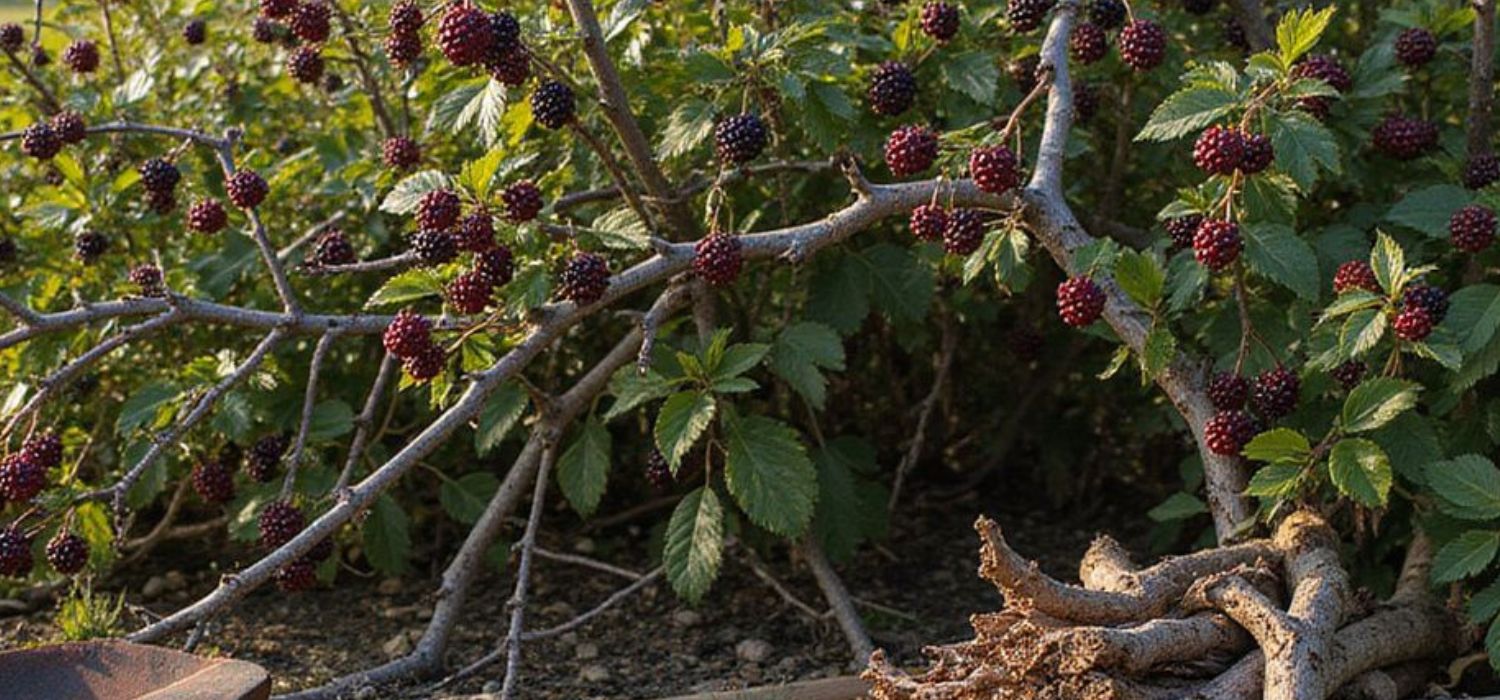
Have blackberry brambles started creeping into your yard, and every attempt to touch them ends with scratches? In this guide, we’ll show you a simple, homeowner-friendly way to cut, dig, and shut down regrowth without turning your weekend into a thorny mess. One quick heads-up that helps explain why these patches spread so fast: in the Pacific Northwest, invasive Himalayan blackberry canes can run long, and they can root at the tips when they touch soil. Stick with us, we’ll walk through the tools, the safest removal techniques, and the follow-up plan that keeps sprouting under control.
Tools and Safety Gear Needed for Blackberry Removal
Before cutting a single cane, you need to set yourself up for a clean, safe job. Thorns snag sleeves, canes whip back, and root crowns fight dirty, so the right gear keeps this project from going sideways. Here’s what you need for this task:
- Protective clothing: Leather gloves, sturdy boots, long sleeves, and tough jeans help prevent punctures and scratches while pruning and hauling thorny canes.
- Eye protection you can rely on: We like safety glasses marked to “ANSI/ISEA Z87.1,” because brushy work can flick grit and thorn bits up fast.
- Cutting tools: Loppers and hand pruners handle thick canes, and a string trimmer or brush cutter can help knock the patch down to stubble once you’ve cleared obstacles.
- Digging tools for root extraction: A shovel or spade plus a claw mattock (or pick mattock) gives you the leverage to pry out the root crown rather than yanking and breaking it.
- A rake or pitchfork for pulling canes back: This keeps your hands out of the thorns while you drag cut vines away from the digging zone.
- A compact first aid kit: Thorn pokes happen.
- Disposal plan (before you start): Don’t assume everything can go in a backyard compost pile. Crowns and root balls should go to trash or yard waste, and stems should be dried out completely (or chipped) before composting so they don’t re-root.
- Hydration and breaks: Lastly, keep water close and take short breaks, especially on warm summer days, because this work gets intense fast.
Quick Guide to Blackberry Removal
For a small patch, aim for a two-part win: remove the root crowns you can reach, then keep new sprouts from rebuilding energy. That’s the core of garden management for invasive plants, and it works whether your patch sits in a lawn, along a fence, or at the back edge of a bed.
Wildlife note: Some regional weed programs warn that birds may nest in blackberry thickets from early spring through July. If your patch is near a natural area, pause and check for nesting activity before you start cutting.
Cutting and Mowing the Canes
Start by making the patch safe to work in. Cutting doesn’t remove the root system, but it sets you up for cleaner digging and better sprout control.
- Clear a safe working lane first: Cut a narrow path around the patch so you can move without getting snagged and pulled into thorns.
- Cut long canes and roll them up: Cut canes into manageable lengths and coil them onto a tarp for dragging. This keeps thorny debris from spreading across the yard.
- Mow or trim down to stubble: For small patches, a string trimmer works well. For wider, open areas, mowing helps, but it provides poor control unless repeated throughout the growing season.
- Pick a smart season for the first knockdown: Oregon State University’s guidance on invasive Himalayan blackberry notes that mowing in late spring, before flowering, helps prevent berry and seed spread for that season.
- Be cautious in dry, fire-prone conditions: Mowers can spark wildfires in spring and summer. If you’re working during very dry weather, consider hand-cutting instead of mowing.
- Use covers as a helper, not a miracle: If you want to block light, use cardboard under mulch in garden beds, or use an opaque tarp for several weeks. University guidance on occultation (using opaque tarps) typically calls for at least four weeks, and cooler conditions may require longer coverage.
Digging Out the Root Crowns
If you want the best odds of reclaiming a small patch, root removal matters. That means removing the crown, not just cutting canes at the surface.
- Confirm what you’re removing: In Washington, Himalayan blackberry (Rubus armeniacus) is listed as a Class C noxious weed, and it’s often confused with native trailing blackberry. If you’re unsure, check leaf shape and cane thickness before you clear everything.
- Cut canes back, but leave a short “handle”: Washington State noxious weed guidance suggests cutting stems back to about a foot so you don’t lose track of the crown location while you dig.
- Dig when the soil is moist: Root grubbing is easiest in early spring or late fall, when the ground is moist, and roots dislodge more cleanly.
- Loosen the wider area, then pry: Circle the crown, slice around it with a shovel, and then use a mattock to pry up the woody base. Pulling straight up usually snaps what you need most.
- Expect spreading roots: The U.S. Forest Service reports that in some plants, roots and rhizomes can extend up to 32 feet. That’s why we always check a wider perimeter after the main crown is out.
- Bag or dry debris so it can’t re-root: Cut canes and root chunks can sprout if they stay moist and touch soil. Keep them on a tarp, off the ground, until they’re fully dry, or send them out with yard waste per local rules.
Tips for Preventing Regrowth
The frustrating truth is that blackberry is built for comeback growth. It can resprout from the crown or rhizomes, and it can form new “daughter plants” when cane tips touch soil.
Lock In Your Follow-Up Routine
Treat follow-up as part of the removal, not as an extra chore. Even after a solid first push, restoration groups often plan for years of maintenance, and some mowing-based programs can run for 10 years or more on big sites. Here are some things to keep in mind:
- First growing season: Walk the edge every 7–14 days and cut or pull any new shoots while they’re small.
- Second growing season: Keep a monthly check, and dig any crowns you missed once the shoots point you to the source.
After that, keep a quick seasonal scan, especially along fences, compost areas, and any spots where birds might drop seed.
Use Mulching the Right Way (and at the Right Depth)
Mulching helps most after you’ve reduced the patch to stubble and removed crowns you can find. For beds and borders, we like a layered approach: cardboard to block light, then wood chips to hold it down and improve soil structure. Keep the following in mind:
- Go deep enough to matter: Washington State University Extension notes that arborist wood chips, maintained at 4–6 inches, can control weeds in landscape settings.
- Keep chips off trunks and fences: Leave a small gap near wood structures and plant stems to reduce rot and pest issues.
- Know the limit: Oregon State University Extension notes aggressive perennial weeds, including Himalaya blackberry, are often not controlled by mulch alone. That’s why we pair mulch with crown removal and sprout control.
Herbicides (Optional) for Stubborn Regrowth
We get it, many homeowners prefer to avoid spraying. Still, if the patch sits in a place where digging will damage roots you want to keep, a targeted approach can be the least disruptive option. Here are some tips to keep in mind:
- Pick the most effective season: Oregon State University’s invasive blackberry guidance notes that late summer and early fall applications are often most effective, and warns that regrowth may occur after treatment, so plan follow-up.
- Go targeted, not broadcast: Cut-stump or careful spot treatment can reduce drift onto plants you want to keep.
- Follow the label, especially near water: If you’re near a ditch, pond, wetland edge, or creek, use only products labeled for that site and follow all local requirements.
Why Hire Carlson Tree Care for Blackberry Bush Removal?
Does your “small patch” keep reappearing, or is it tangled into landscaping you want to protect? That’s when it helps to bring in a tree service crew that can safely remove brambles, properly haul debris, and leave the area ready for the next step. We’re based in Shelton, WA, and our team has decades of combined industry experience serving residential and commercial customers throughout Shelton and the surrounding areas. Our crew can:
- Handle the hard parts: Brush hogging, targeted root removal, debris clearance, and site cleanup so you’re not stuck dragging thorny canes across your yard.
- Protect what you want to keep: Our team can work around fences, ornamentals, and tree root zones with controlled removal techniques.
- Set you up to prevent regrowth: After removal, we can help with mulching and land maintenance, making it much harder for sprouting to take root.
We also handle tree removal, general bush removal, pruning, stump grinding, land clearing, debris clearance, and firewood services. Our company even provides 24-hour emergency services.
Final Thoughts
Small blackberry bramble patches are absolutely manageable, as long as you treat removal and follow-up as one plan. Start with safety gear, cut the patch down for access, then focus on root extraction where you can. Use mulching and ground cover to reduce sprouting, and keep a simple check routine throughout each growing season. If you want help reclaiming your yard, we’re ready to provide the land maintenance that keeps it from coming right back.
FAQs About Blackberry Removal for Beginners
How do I stop blackberries from coming back after removing a small patch?
Cover the ground with thick mulch or landscape fabric and watch for new shoots. Pull or cut new growth quickly and repeat until shoots stop.
What is the safest way for beginners to start blackberry removal on a small patch?
Wear thick leather gloves and long sleeves. Cut canes near the base with pruning shears. Use a garden fork to lift roots and move debris in a wheelbarrow.
When is the best time to remove blackberries from a small patch?
Do it in late winter or early spring before new growth starts.
Which tools help beginners safely remove blackberries?
Use pruning shears for thin canes and loppers for thick canes. A pruning saw helps with old wood, and a garden fork pulls roots.